


Last Seen: Cold Case Mystery
4.470.00 Reviews
App Specs
- Version
- 1.11.0
- Updated On
- License
- Free
- Downloads
- 50,000+
- Developer
- Hohama Studio
- Categories
- Entertainment
- Platform
- Android
Screenshots
 Analysis by AppCompare
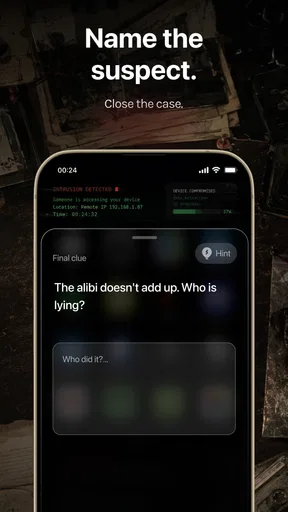
I opened Last Seen: Cold Case Mystery expecting a short entertainment app built around a familiar detective idea, but its appeal is more specific than that. You are not simply reading a case file or tapping through a standard puzzle board. The central task is to examine a victim’s phone, notice useful details, connect separate clues, and decide what each discovery means. That makes the experience feel closer to sorting through digital evidence than completing a conventional level.
That starting point matters because the app asks for a particular kind of attention. I had to slow down, read carefully, and remember small details instead of relying on quick reactions. If you enjoy true-crime fiction, amateur investigations, or story games that make you feel involved in the search, this is an appealing format. If you prefer fast action, open exploration, or puzzles with clearly marked answers, the same design may feel restrictive.
It is a free entertainment app from Hohama Studio, with optional purchases ranging from $1.99 to $39.99 per item. The Teen content rating is also worth taking seriously: the subject matter is built around a victim and a cold case, so this is not the kind of mystery I would automatically hand to a young child. On my Android device, the app supports Android 7.0 and later, which keeps the technical entry point fairly accessible.
Following the case from the first clue to the final theory
I’ll focus on how the investigation builds from its opening evidence toward a theory, including why it can help to separate what the phone directly shows from what you infer. That distinction gives each clue room to change your thinking rather than locking you into the first plausible suspect.
Beginning with a phone instead of a map
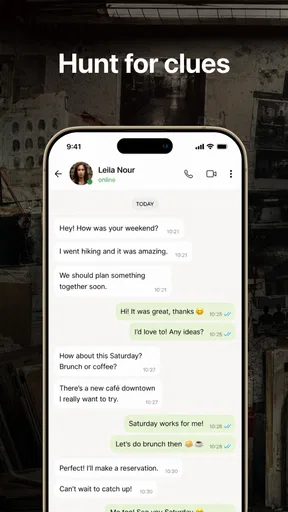
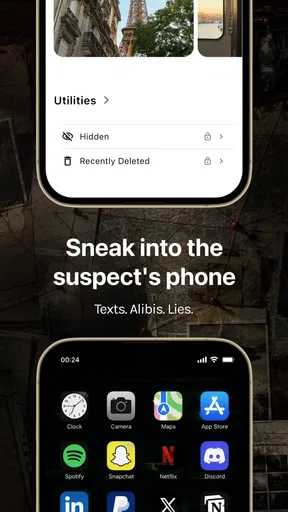
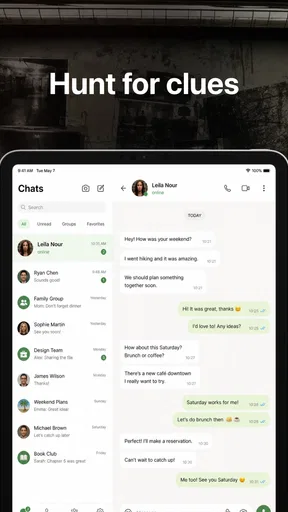
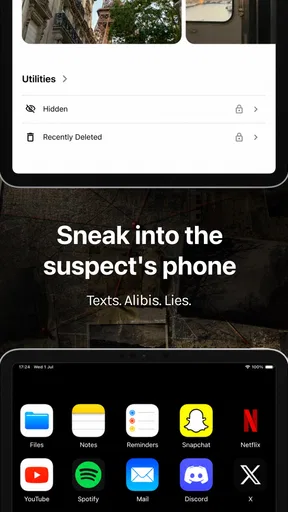
The strongest choice in the setup is the decision to make the phone the main investigation space. A traditional detective game often presents a room, a city, or a collection of suspects. Here, the device itself becomes the place I searched. That immediately changes how I played: I was not looking for a glowing object in a scene, but trying to understand how ordinary digital traces might fit together.
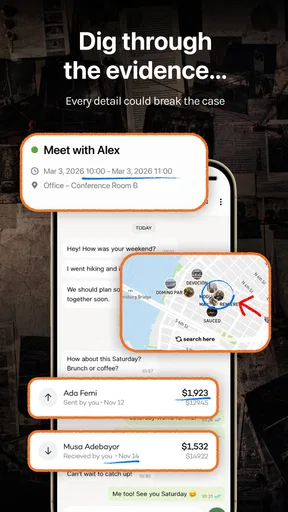
Messages, personal details, and other pieces of phone-based information are more effective when treated as fragments rather than answers. I found myself asking practical questions: who is speaking, when did this happen, what is being avoided, and does one conversation change the meaning of another? The app works best when I resisted the temptation to treat every new screen as a separate puzzle.
This format also creates a useful feeling of uncertainty. A message can sound harmless until another clue gives it a different context. A name may matter only after it appears elsewhere. That is where the game earns its detective identity. It encourages interpretation, not just recognition.
Worth Reading Before You Choose

Flipboard Shows What News Apps Must Do Beyond the Feed

Switching to Android Auto Means Rethinking Your Driving Routine

Google Calendar Makes a Crowded Week Easier to Manage

Ludo King Makes the Most of the Minutes Between Plans

Baby Panda World Brings Quick Play to Modern Phones, but Its Game Library Feels Busy

ESPN’s Live Game View Makes Following Close Games Easier
A practical search routine
My most reliable approach was to work methodically. I first read the available material without trying to solve everything immediately. Then I mentally grouped details by person, timing, and possible motive. When something seemed important, I returned to nearby information instead of jumping randomly through the case.
That routine is more valuable here than rapid tapping. The interface may invite you to move from one item to the next, but the real progress comes from remembering relationships. I recommend keeping a small note outside the app if you regularly forget names or timelines. That is not a sign that the game is poorly designed; it is a practical way to reduce the mental load when several clues begin to overlap.
A second useful habit is to separate facts from assumptions. I tried to write down what the phone actually showed before deciding what it implied. That distinction helped prevent an early suspicion from controlling the rest of the investigation. In a mystery built from incomplete information, a confident guess can be more dangerous than a missing clue.
How the clues become a story
The case structure is most satisfying when a discovery changes the way I read something I had already seen. That kind of payoff feels earned because the answer comes from connecting information rather than waiting for a dramatic explanation. I enjoyed the moments when an apparently minor detail became useful later, especially because the phone format made those details feel like part of a real person’s digital life.
At the same time, the experience depends heavily on your willingness to read. This is not a game I would choose while distracted on public transport if I wanted a quick, low-commitment distraction. A noisy environment can make it easy to miss a line or forget why a contact seemed suspicious. The app is better suited to a quiet break where I can give the case a little concentration.
What happens when the investigation moves forward
The handoff from one clue to the next is the heart of the experience. The phone gives me information, but I have to perform the investigative work of organizing it. That makes the player feel less like a spectator and more like someone receiving an unfinished file from another investigator.
This also explains why the app can feel slower than ordinary casual entertainment. The purpose is not to flood the screen with rewards. The purpose is to create a chain of suspicion, confirmation, and revision. When that chain is working, the slower pace feels deliberate. When I was not seeing how two pieces connected, it felt more like searching than solving.
For a realistic everyday scenario, imagine playing during an evening break after work. I would read through the latest material, stop when a new name appeared, and leave the app to think about the timeline. Returning later can be helpful because the pause gives the clues room to settle. However, if you dislike stopping mid-investigation, the same design can be frustrating because the story does not always resolve at the speed of a short session.
Where the player becomes the investigator
The important handoff is from the app’s evidence to my own judgment. The game can present the phone and its clues, but it cannot make the final connection feel meaningful unless I have built a theory myself. That is the main difference between this and a passive crime series. Watching a detective notice a clue is not the same as deciding which clue deserves attention.
I appreciated that the format leaves space for doubt. A good mystery should make me revise my view, and the phone-based presentation supports that naturally. Digital conversations often contain omissions, awkward timing, and unexplained relationships. Those gaps create the tension, but they also mean that players who want constant certainty may find the flow uncomfortable.
There is a trade-off in this approach. A tightly controlled story can deliver a clear dramatic arc, while a clue-driven investigation gives the player more responsibility but can feel less immediate. Last Seen leans toward the second experience. I would recommend it to someone who enjoys forming theories, not to someone looking for a purely cinematic narrative.
What the result feels like
The payoff is not only reaching the end of a case. It is the gradual feeling that scattered phone details have become a coherent explanation. I found the result more satisfying when I had made at least part of the connection before the story confirmed it. That sense of participation is the app’s biggest strength.
It is also why I would avoid searching for outside solutions too quickly. A walkthrough might remove the immediate frustration, but it would also take away the most distinctive part of the experience: deciding what matters. If I were stuck, I would reread the earliest material first, rebuild the timeline, and look for a detail that had been treated as background.
Players may reasonably wonder whether the app is suitable for short sessions. My answer is yes, but with a qualification. You can make progress in a brief break, yet the investigation benefits from longer uninterrupted attention. It is easy to open the app for a few minutes and then realize that the clues require more memory than a casual tap-through game.
Where the flow breaks
The biggest point of friction is clue visibility. In a phone-based mystery, the player must understand what is available, what has already been examined, and what still needs interpretation. If I missed the significance of a detail, the problem was not always lack of intelligence; sometimes it was simply that the game expects careful rereading.
That can make the experience feel repetitive. Returning to old information is part of detective work, but it is less enjoyable when I am doing it because I cannot tell whether I overlooked a meaningful interaction or merely misunderstood the story. The app is at its best when the uncertainty comes from the case, not from confusion about the next step.
Another limitation is its narrow emotional lane. The victim-centered, true-crime framing gives the investigation weight, but it may not suit players who want lighthearted entertainment. The Teen rating signals that the subject matter should be approached with some maturity. I would skip it for children and for anyone who finds fictional disappearances or crime narratives unpleasant rather than intriguing.
The optional purchase model is another consideration. The app is free to start, which makes trying the format straightforward, but the presence of individual purchases means I would pay attention before confirming anything. I would not assume that every player will have the same tolerance for spending during a story investigation. Someone who wants a completely predictable, one-time-cost experience may prefer a premium mystery game instead.
How it compares with familiar alternatives
Compared with a standard hidden-object game, this app asks for more interpretation and less visual scanning. Hidden-object titles are usually clearer about the immediate task: find the listed items, solve the scene, and move on. Last Seen is more dependent on reading context and remembering relationships, so it feels closer to interactive crime fiction.
Compared with a television crime drama, it gives me more involvement but less passive momentum. A show controls the timing, performance, and reveal. Here, I control the pace of inspection and have to do more of the connecting. That makes the experience more personal, although it also means the story can lose energy when I am stuck.
Compared with a broad detective adventure, the phone setting is more focused. I am not wandering through a large world or managing a long list of equipment. The benefit is a concentrated case with a clear investigative object. The drawback is that players seeking exploration, character customization, or action will find the scope limited.
For me, the best comparison is an interactive evidence file. That description captures both the strength and the weakness: the format is distinctive because it makes ordinary digital traces feel important, but it relies on the player enjoying careful examination. The right audience is someone who wants to think through a mystery, not merely watch one unfold.
Who should try it and who should pass
I would recommend it to fans of true-crime fiction, narrative puzzle apps, and stories built around messages and personal records. It is particularly suitable for players who enjoy pausing to form a theory, revisiting earlier clues, and noticing how a small detail changes a larger picture.
I would be more cautious recommending it to people who want fast rounds, reflex challenges, or a relaxing game that can be played without reading. The same applies to anyone who dislikes ambiguous clues or becomes annoyed when the next step is not obvious. A conventional word puzzle or hidden-object title may be a better fit for those preferences.
The app’s audience size also suggests that it has found a meaningful niche without being something I would describe as universal entertainment. It has an average rating of 4.4 from around 992 ratings, and it has passed 50 thousand installs. Those figures give me useful context: there is clear interest in the format, but the experience remains specialized rather than designed for everyone.
What to know before installing
Last Seen runs as an Android entertainment app and is currently at version 1.11.0. The developer is Hohama Studio. I would install it when I have time to read and think, rather than treating it as a five-minute filler between other tasks.
The free entry point is helpful for deciding whether the phone-investigation format suits you. Before spending money, I would first test my reaction to the reading pace, clue organization, and Teen-rated subject matter. If those elements work for you, the optional purchases may be easier to evaluate in the context of your own play style. If the basic investigation already feels too slow, paying more is unlikely to solve that underlying mismatch.
I would also keep expectations realistic about the kind of achievement the app offers. The satisfaction comes from understanding the case and making connections, not from mastering a complex control system. Its challenge is attentiveness. That makes it a good choice for a quiet evening, but a poor choice when I want something energetic or visually expansive.
My final take
After working through its phone-centered investigation, I came away with a clear impression: Last Seen: Cold Case Mystery succeeds when I treat it as a case to analyze rather than a story to consume. The digital evidence format gives familiar detective themes a more personal angle, and the strongest moments come when separate details finally form a convincing explanation.
It is not frictionless. The need to reread clues can slow the flow, the subject matter will not appeal to everyone, and the optional purchase structure deserves attention. Still, those drawbacks do not erase the central strength. Hohama Studio has built an experience for players who enjoy the quiet work of investigation: reading, comparing, doubting, and revising.
I would recommend trying it if you want a focused mystery that puts the evidence in your hands. Start patiently, keep track of names and timing, and avoid rushing to outside answers. If you prefer action, broad exploration, or a completely lighthearted app, choose something else. For the right player, though, this is an engaging way to turn an ordinary phone interface into a trail of clues.
Pros
- Atmospheric crime scenes create a convincing cold-case mood.
- Clues are generally easy to inspect and organize.
- The mystery suits short
- casual play sessions.
- Distinctive characters make the investigation more memorable.
- The interface is simple to learn on smaller screens.
Cons
- Some puzzles may feel familiar to experienced mystery-game players.
- Progress can slow when one overlooked clue blocks the case.
- The darker subject matter may not suit younger players.
- Replay value is limited once the solution is known.
- Performance may vary on older phones or tablets.
FAQs for Last Seen: Cold Case Mystery
What is Last Seen: Cold Case Mystery about?
Last Seen: Cold Case Mystery is a narrative investigation game centered on the disappearance of a teenage girl. You examine messages, photographs, social media activity, and other digital clues to reconstruct what happened. Progress depends on connecting details, questioning suspicious events, and making careful deductions rather than simply completing traditional hidden-object puzzles or action stages.
How does the gameplay work in Last Seen: Cold Case Mystery?
The game is primarily played by exploring a simulated smartphone and reviewing its contents. You can read conversations, inspect media, discover passwords or clues, and unlock new information as the investigation develops. Several details may appear insignificant at first, so paying attention to names, dates, relationships, and changes in the characters’ stories is important for solving the case.
Is Last Seen: Cold Case Mystery free to download and play?
Last Seen: Cold Case Mystery can generally be downloaded without an upfront purchase, but availability of optional in-app purchases, advertising, or episode-related payment may depend on the platform and region. Before installing, check the current Google Play or App Store listing for pricing information. Some content may also require patience if the game uses waiting periods or progression limits.
Does the game require an internet connection?
An internet connection may be needed for downloading the game, loading certain story content, displaying advertisements, synchronizing progress, or completing purchases. Although some previously loaded sections may remain accessible offline, the experience is designed around regularly unlocking and receiving digital information. For the most reliable performance, play while connected to a stable Wi-Fi or mobile network.
Is Last Seen: Cold Case Mystery suitable for children?
The game is better suited to teenagers and adults because its story involves a missing person, suspicious behavior, emotional tension, and themes related to danger and crime. It does not focus on graphic action, but younger players may still find some situations unsettling. Parents should review the store age rating, privacy details, and in-app purchase settings before allowing installation.


